India is home to over 1.4 billion people, and more than 11% approximately 150 million individuals are already aged 60 and above. By 2050, this number is projected to cross 300 million, meaning nearly one in five Indians will be elderly. At the same time, India has roughly 1.7 nurses and 0.9 doctors per 1,000 population, well below WHO recommendations. The old-age dependency ratio is rising steadily, while chronic diseases account for over 60% of total deaths. With limited geriatric infrastructure and a shrinking caregiver-to-elderly ratio, the healthcare system faces a structural imbalance that traditional hospital-based models alone cannot sustain.
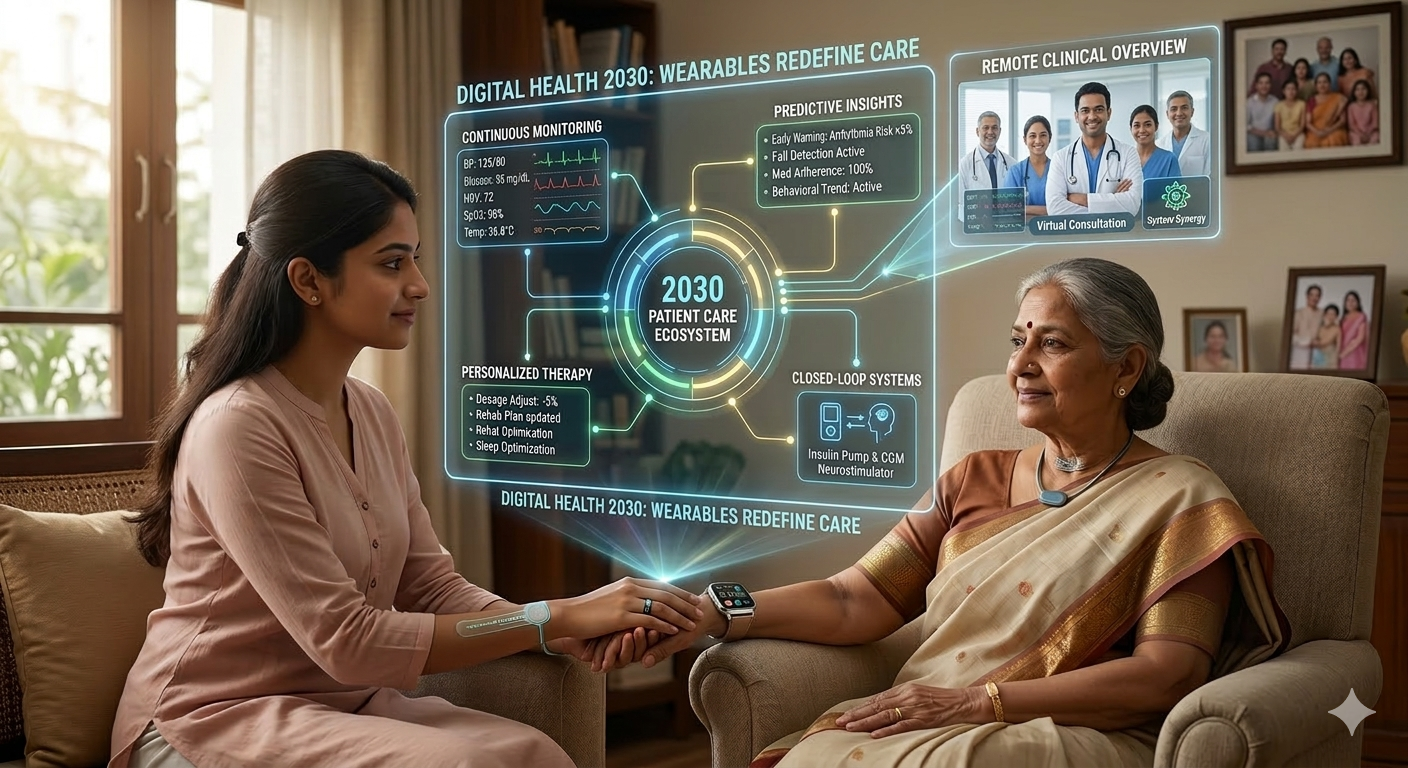
Healthcare is standing at the edge of a major digital shift. By 2030, care delivery will no longer revolve only around hospitals and clinics—it will become continuous, connected, and more personalized. At the heart of this transformation are wearable devices, enabling real-time health monitoring and proactive intervention.
Wearables have already moved far beyond step counters and basic fitness tracking. Today's smart devices can monitor heart rate, oxygen saturation, sleep cycles, physical activity, and in some cases detect irregular heart rhythms. Over the next few years, wearable technology is expected to expand further into clinical-grade monitoring—supporting continuous glucose tracking, better blood pressure estimation, respiratory analytics, fall detection, and more reliable predictive cardiac alerts.
This shift signals a move from reactive to preventive healthcare. Instead of waiting for symptoms to become severe, doctors and care teams will be able to rely on continuous streams of patient data to detect abnormalities early. Remote Patient Monitoring (RPM) will increasingly become standard practice, especially for chronic conditions such as diabetes, hypertension, cardiovascular disease, and respiratory disorders. AI-driven analytics will help interpret patterns, forecast risks, and guide timely medical decisions, reducing avoidable complications, lowering readmissions, and improving outcomes.
However, this digital transformation requires strong innovation ecosystems. Alongside global technology leaders, a growing set of Indian digital health companies and medtech innovators are building solutions that make continuous care practical at scale. Platforms and device makers working across remote monitoring, chronic care, and clinical-grade sensing—such as Philips and GE Healthcare—are pushing the boundaries of connected monitoring and care delivery. In parallel, India's care platforms like Practo, Apollo 24|7, Tata 1mg, MediBuddy, and mfine are strengthening the teleconsult + follow-up layer that makes RPM programs easier to run. On the clinical intelligence and diagnostics side, companies like Qure.ai, Niramai, and Tricog are showing how AI and specialized workflows can support earlier detection and faster escalation. Emerging startups such as Mozek Healthtech and Dozee are also playing an important role by tailoring solutions for assisted living facilities, rehabilitative centers, home care, and hospitals—where reliability, affordability, and workflow integration matter more than "consumer gadget" features.
Similarly, infrastructure hubs and manufacturing ecosystems are crucial in strengthening medical device capabilities—especially in countries aiming to scale high-quality wearable technologies domestically. Clusters such as Andhra Pradesh MedTech Zone (AMTZ) help by enabling R&D support, regulatory facilitation, testing infrastructure, and pathways to large-scale production—creating the foundation needed for the next generation of wearable medical devices. When paired with strong clinical partnerships and interoperable digital health infrastructure, these ecosystems help convert promising prototypes into reliable, deployable medical products.
As we approach 2030, digital health will be defined by connectivity, intelligence, and patient empowerment. Wearables will enhance clinical insight, enable more personalized care pathways, and support a proactive healthcare ecosystem. The future of patient care will not be confined within hospital walls; it will be integrated seamlessly into everyday life powered by collaboration across device makers, care platforms, health systems, and the innovation infrastructure that makes scaled deployment possible.